Building a Cheap In-ear Monitor (IEM) System
Gear · Live Sound · Mixing
One of the most common questions we get is how to build a simple IEM system. Within the past decade, the use of IEM systems has risen significantly as wireless and digital technology has improved. Nearly all major acts today use some type of in-ear monitoring system. Most bands require an IEM system on the rider (or sometimes even bring their own).
The advantages of a good IEM system are numerous. First, they can significantly help reduce stage volume. With traditional wedge monitors, you can easily get a huge increase in stage volume that can even overpower the house mix for the first few rows of the audience. IEMs also provide a ton of flexibility. Do you want to play with a click track to keep up a solid tempo? IEMs allow that without the audience hearing your click. Syncing with a click track allows the band to also play with backing tracks off an iPod or a more sophisticated system such as a laptop running Ableton Live.
However, most good IEM systems are still expensive. You can easily drop over $500 per unit for transmitter and receiver. With a four piece band, you can spend over $2000 for a basic IEM setup. Much of what you’re paying for is the wireless technology. In order to reduce the cost we’ll be create a wired IEM system. It’s not quite as flexible or fun, but it’ll do the trick for many bands.
So how do we create a basic in ear system? I’m glad you asked!
 And here is the gear we’re going to need:
Creating Wired IEMs
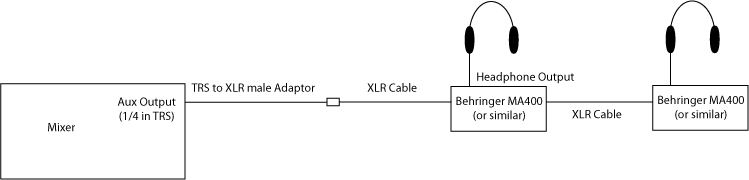
First, we’ll be using Aux sends to send signal to our monitoring system. For this example, let’s assume we’ll only using one aux send. If you want to use multiple aux sends to create multiple mixes, you can just duplicate the signal chain across several aux sends, you’ll just need to purchase additional gear. Here is what our signal path is going to look like:
And here is the gear we’re going to need:
- ¼ in TRS to XLR male cable
- 1 long XLR cable (can often be built in as a return on the snake)
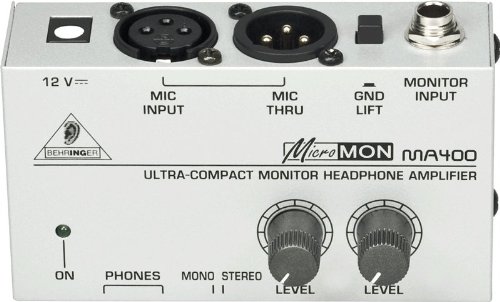
- Behringer MA400 (times however many stations you want)
- Short XLR cables (times as many stations you want)
- Your favorite earbuds or headphones (times as many stations as you want)
- Headphone extension cable (times as many stations as you want)